Pricing Strategies
A teaching sample from AP Business with Personal Finance.
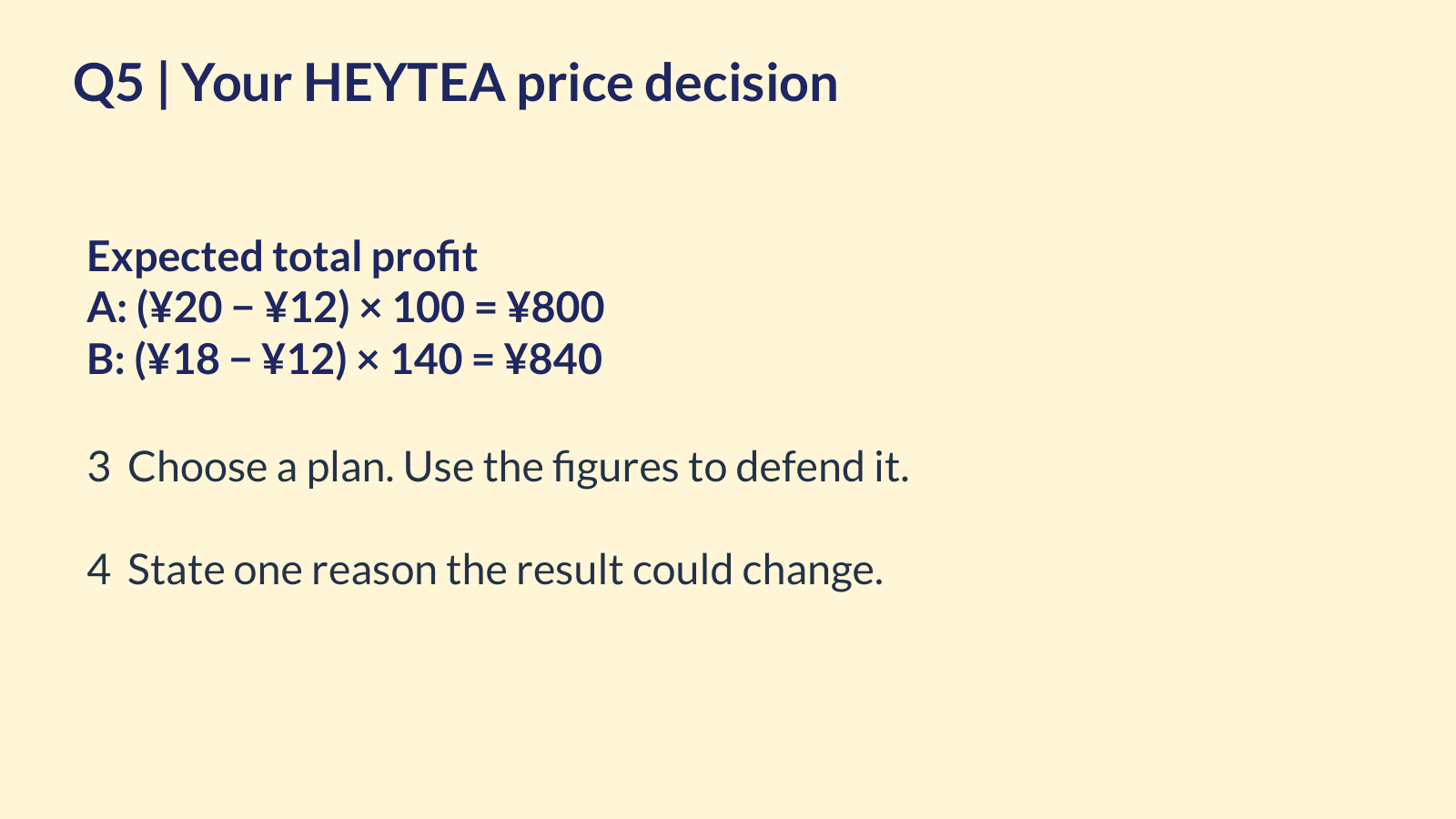
Students calculate profit from two sample sales forecasts, defend a pricing decision, and explain what could change it.
Lesson slides
Two previews were adapted with Simplified Chinese prompts and illustrative milk tea photos. Select an image to open it at full size.
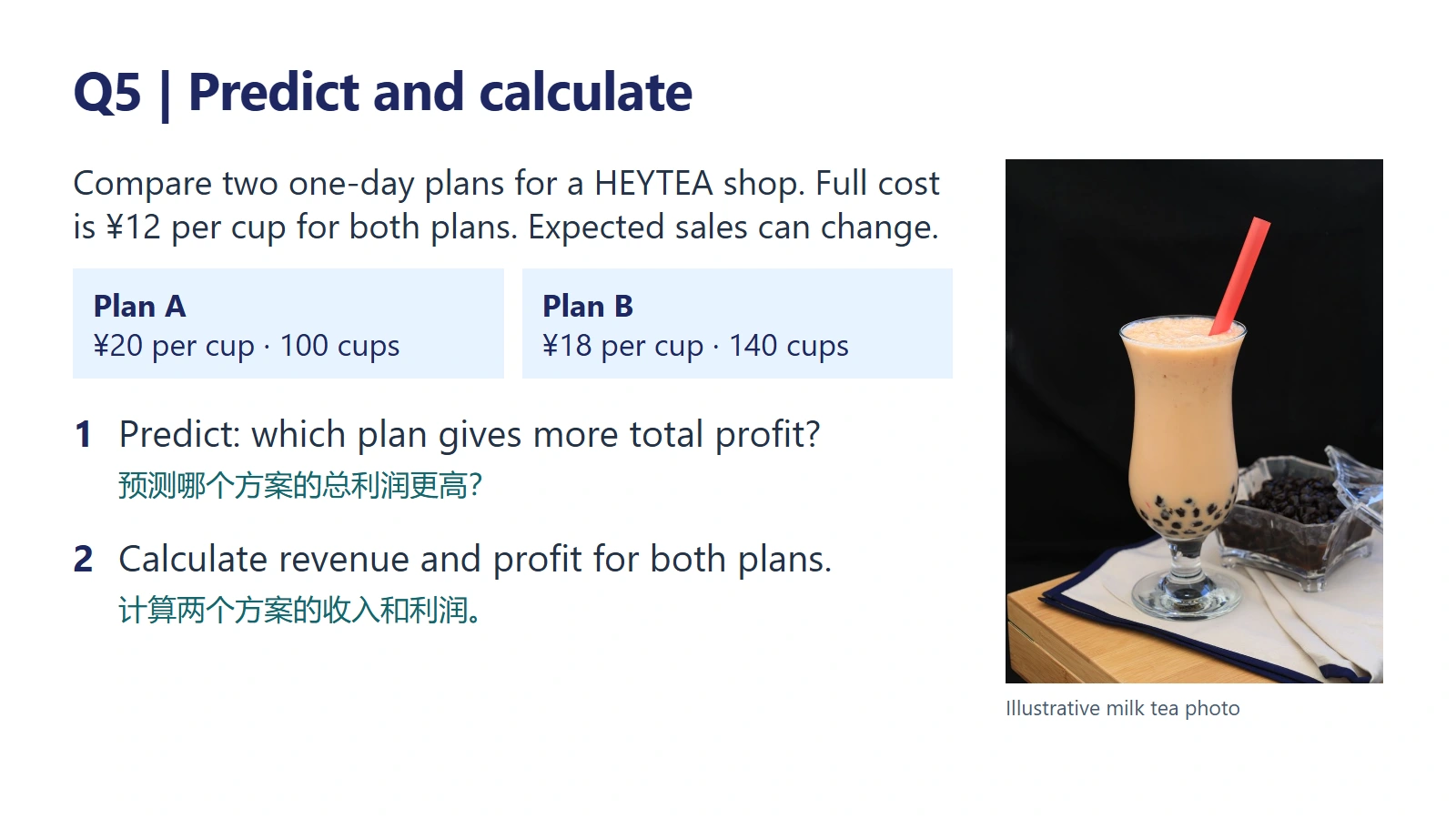
Photos by Shameel mukkath and Nguyễn Tiến Thịnh via Pexels.
Blank student handout
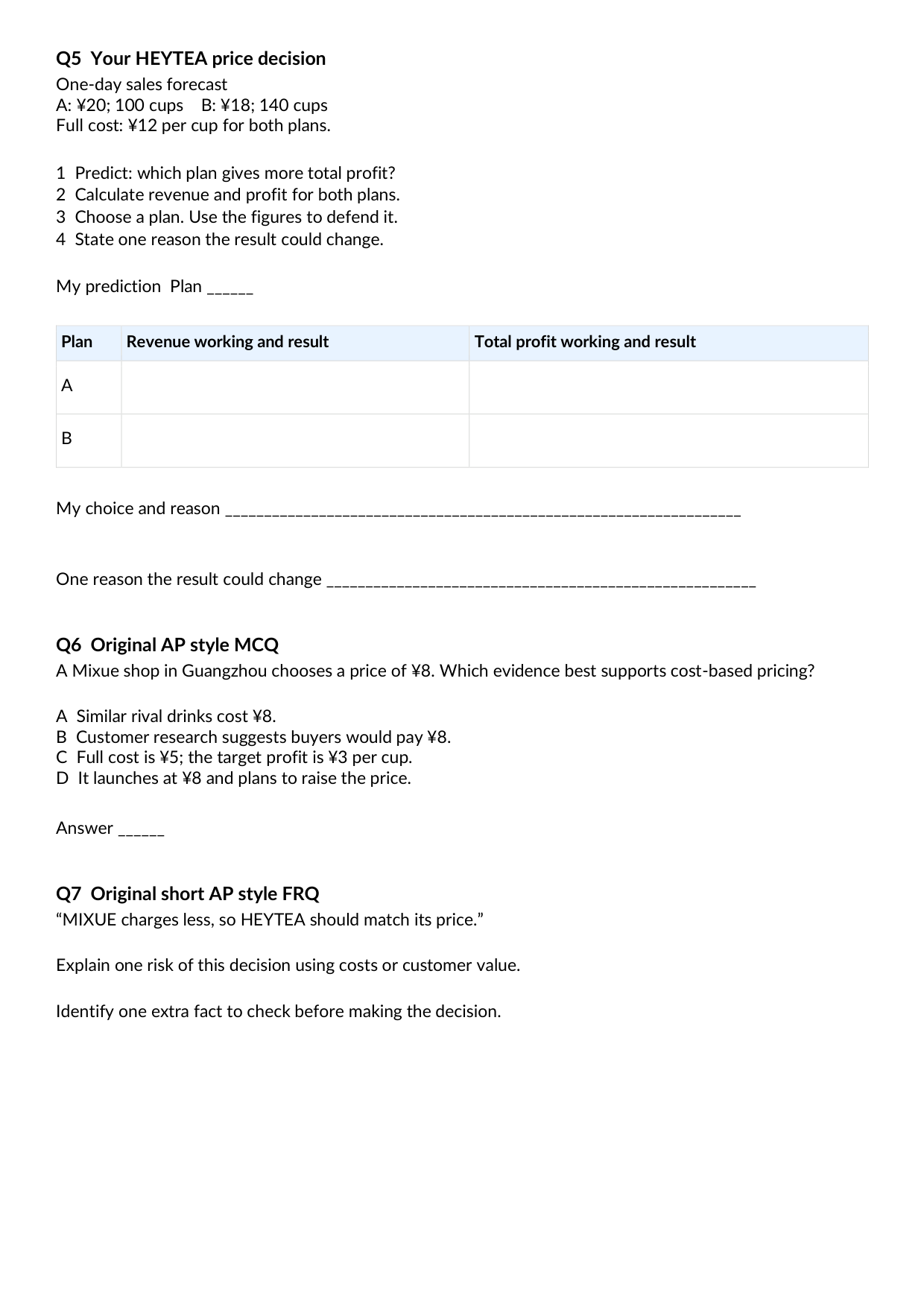
Read the handout as text
- Which would you choose? After PE, you are thirsty and have little cash. For a weekend treat, you want a flavour you enjoy. Choose a brand for each situation. Give a reason beyond “cheap” or “expensive”.
- Same price. HEYTEA makes two decisions. Both prices are ¥18. In A, tasters explain why the fruit and texture are worth ¥18. The manager uses that feedback. In B, similar drinks nearby cost ¥17–¥19. The manager uses those prices. Identify each strategy and explain each answer with one piece of evidence.
- Challenge the claim. “MIXUE has low prices, so it must use penetration pricing.” Does the evidence prove this? What extra evidence would change your answer?
- Find the missing evidence. A HEYTEA promotion sells 120 cups, up from 100. “The shop sold more, so total profit must be higher.” What two per-cup figures must you check for both periods? Explain why.
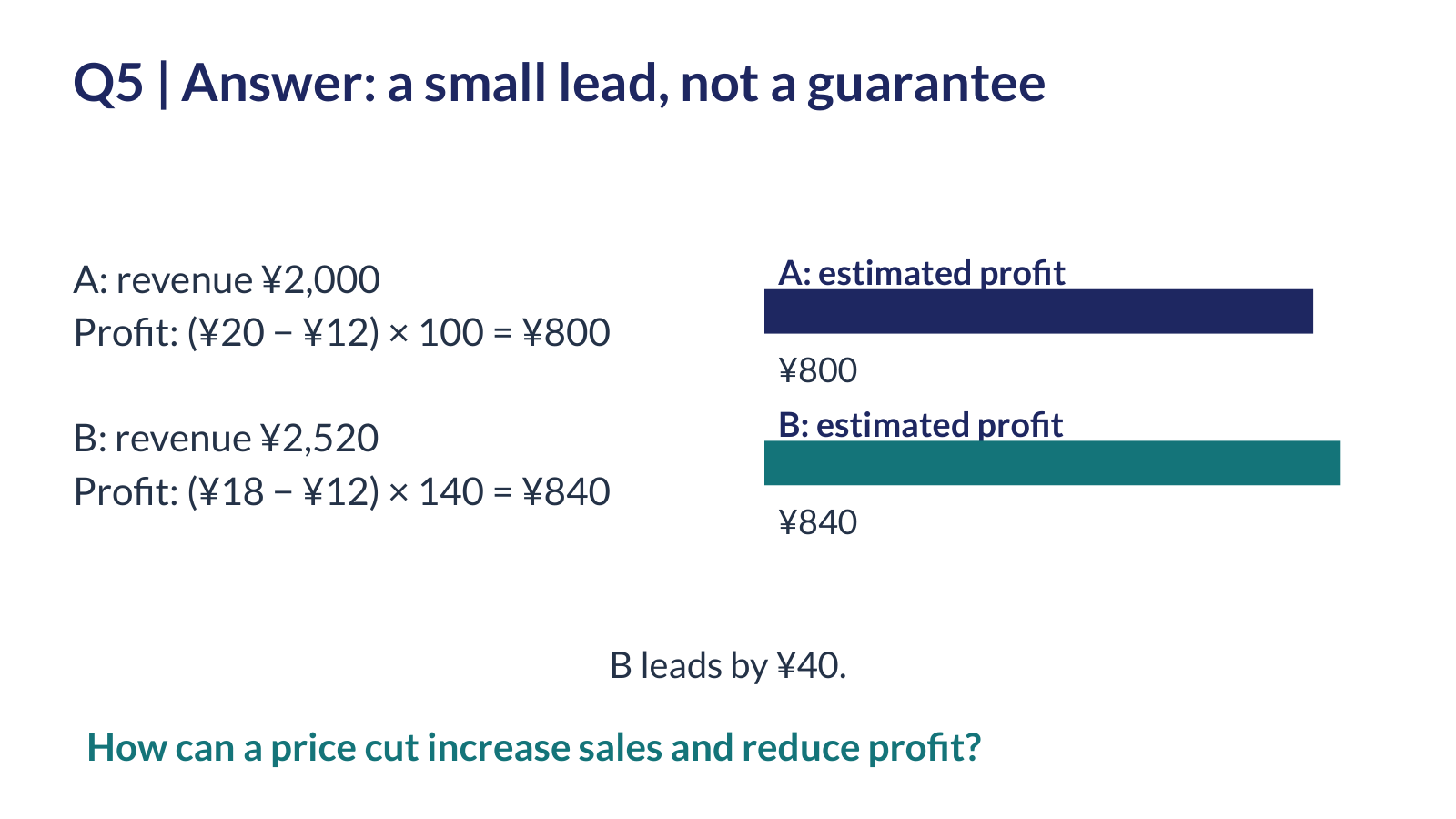
- Your HEYTEA price decision. In one day, plan A forecasts 100 cups at ¥20 each. Plan B forecasts 140 cups at ¥18 each. Both plans cost ¥12 per cup. Predict which plan earns more profit. Calculate revenue and profit for both. Defend your choice with the figures. State one reason the result could change.
- Original AP-style multiple-choice question. A MIXUE shop chooses a price of ¥8 in Guangzhou. Which evidence best supports cost-based pricing?
- Similar rival drinks cost ¥8.
- Customer research suggests buyers would pay ¥8.
- Full cost is ¥5. The target profit is ¥3 per cup.
- The shop launches at ¥8 and plans to raise the price.
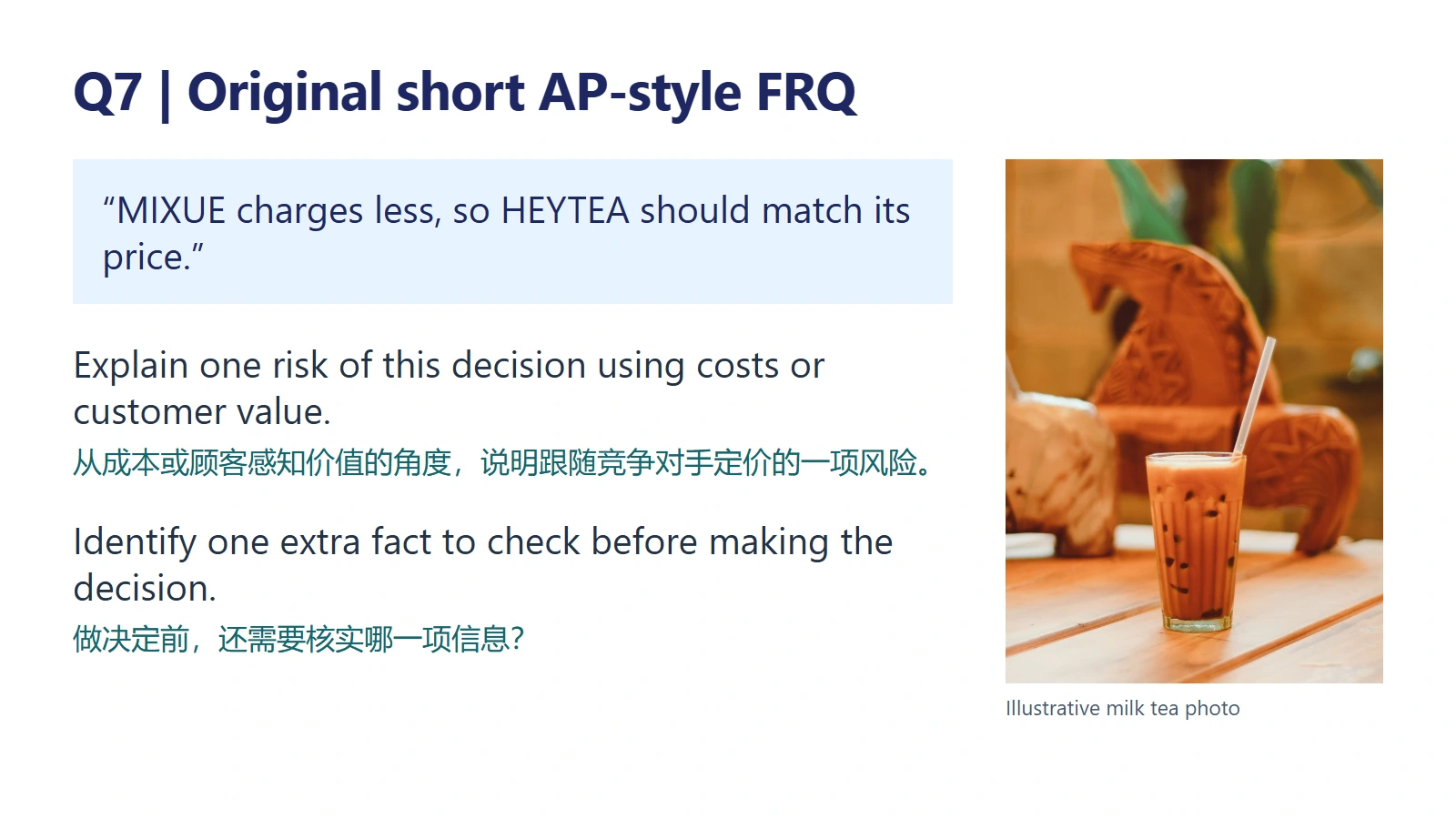
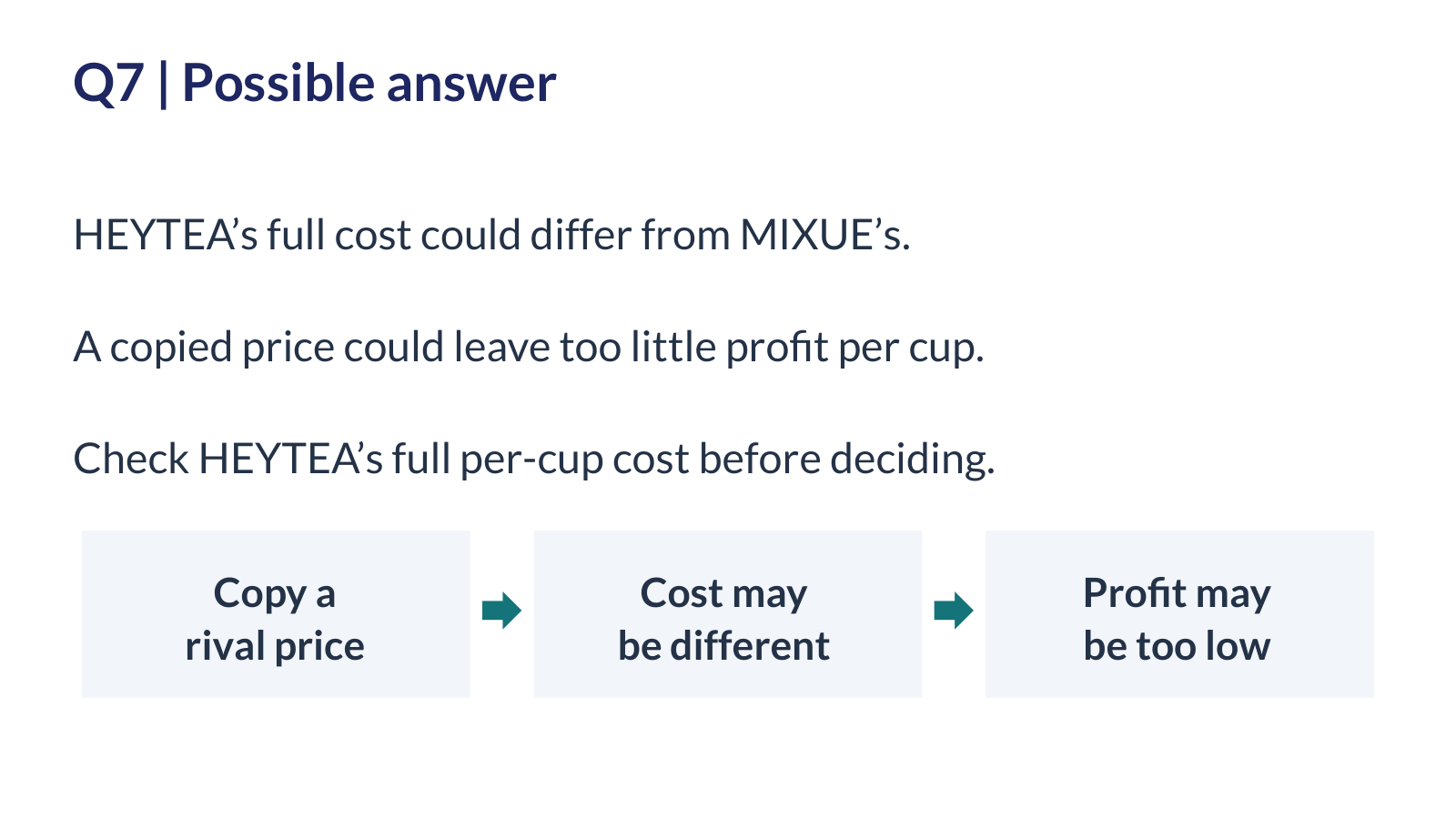
- Original AP-style free-response question. “MIXUE charges less, so HEYTEA should match its price.” Explain one risk using costs or customer value. Identify one extra fact to check before making the decision.